Coffee is more than just a beverage—it's a cultural phenomenon, a global commodity, and a daily ritual for billions. But before it was the centerpiece of bustling cafés or the fuel for morning routines, coffee had humble, mysterious origins. The story of coffee’s journey from wild forests to modern espresso bars is rich with legend, adventure, innovation, and social change. Let’s take a deep dive into the captivating history of coffee, tracing its path from discovery to the myriad of variants enjoyed today.
The Mythical Origins: Coffee's Discovery in Ethiopia
The tale of coffee’s discovery is steeped in legend and folklore. The most popular story traces its roots to 9th-century Ethiopia, where a goat herder named Kaldi noticed his goats becoming unusually energetic after eating red berries from a certain bush. Curious, Kaldi tried the berries himself and experienced a newfound vitality.
Local monks soon caught wind of the energizing fruit. They began to brew a beverage from the berries, finding that it helped them stay awake during long hours of evening prayer. While the exact details are lost to time, most historians agree that coffee’s use as a stimulant originated in the forests of Ethiopia’s Kaffa region—hence the name “coffee.”
.png)
Archaeological evidence suggests that native coffee plants (Coffea arabica) have thrived in Ethiopia for centuries, and oral traditions reinforce the beverage’s cultural significance in the region. Even today, Ethiopia remains one of the world’s most celebrated coffee producers, with an estimated 15 million Ethiopians relying on coffee cultivation for their livelihood.
Coffee's Spread to the Arab World: The Rise of the Coffeehouse
Coffee’s journey from Ethiopia to the wider world began in the 15th century, when it crossed the Red Sea into Yemen. By the 1400s, Sufi monks in Yemen’s port city of Mocha were brewing coffee to aid in their nocturnal devotions. The Yemeni method involved roasting and brewing the beans, much like we do today.
From Yemen, coffee’s influence radiated across the Arabian Peninsula. By the 16th century, the beverage had become an integral part of daily life in cities like Mecca, Cairo, and Istanbul. The first known coffeehouses, known as qahveh khaneh, opened their doors in the Middle East during this era. These establishments quickly became social and intellectual hubs, where patrons gathered to discuss politics, poetry, and news over cups of coffee.
Coffee’s growing popularity did not come without controversy. Some religious authorities initially opposed the beverage, fearing its stimulating effects and the lively discussions it inspired. Nonetheless, coffeehouses flourished, laying the groundwork for the beverage’s global spread.
Coffee Conquers Europe: From Exotic Curiosity to Daily Ritual
By the 17th century, coffee had found its way to Europe via Venetian and Dutch traders. The first European coffeehouse opened in Venice in 1645, followed by London in 1652 and Paris in 1672. Coffee quickly captivated the continent’s elite and intellectuals.
In England, coffeehouses became known as “penny universities” because, for the price of a cup, patrons could engage in stimulating conversation and debate. By 1700, London boasted more than 500 coffeehouses, frequented by luminaries such as Samuel Pepys and Isaac Newton.
Coffee’s influence even extended to the world of commerce. In 1688, Edward Lloyd’s coffeehouse in London became the meeting place for ship owners, merchants, and insurers—eventually giving rise to Lloyd’s of London, the renowned insurance market.
Despite periodic bans (such as the brief “Women’s Petition Against Coffee” in 1674, which humorously claimed coffee made men impotent), coffee’s popularity soared. By the 18th century, it was firmly entrenched as a daily staple across Europe.
Colonialism and the Globalization of Coffee Cultivation
As demand for coffee exploded in Europe, colonial powers sought to break the Arab monopoly on cultivation. The Dutch were the first to succeed, smuggling coffee plants out of Yemen in the late 1600s and establishing plantations in Java (Indonesia) by 1699.
The French followed suit, transporting coffee seedlings to Martinique in the Caribbean in 1720. Legend has it that Captain Gabriel de Clieu carried a single coffee plant across the Atlantic, nurturing it on his perilous voyage. Within 50 years, Martinique’s plantations boasted over 18 million coffee trees.
Other colonial powers established coffee crops in their territories: the Portuguese in Brazil, the Spanish in Central America, and the British in India and Sri Lanka. By the 19th century, Brazil had become the world’s leading coffee producer—a title it still holds, accounting for about 37% of global coffee production as of 2023.
The globalization of coffee cultivation had profound economic and social effects. While it provided livelihoods for millions, it also fueled colonial exploitation, land dispossession, and the use of enslaved labor. These historical dynamics continue to shape the modern coffee industry.
Innovation Brews: From Instant Coffee to Specialty Variants
The Industrial Revolution and ensuing centuries saw coffee transformed by technological innovation. In 1901, Japanese-American chemist Satori Kato invented the first soluble instant coffee, revolutionizing convenience. Nestlé further advanced the field with Nescafé in 1938.
Espresso, now synonymous with Italian coffee culture, originated in the early 1900s when Luigi Bezzera and Desiderio Pavoni patented the first espresso machine in Milan. Their invention used steam pressure to rapidly brew a concentrated, crema-topped shot of coffee—a technique that defined modern café culture.
The 20th century also saw the rise of specialty coffee. In 1974, American coffee expert Erna Knutsen coined the term “specialty coffee” to describe high-quality, traceable beans with unique flavors. This movement sparked a renaissance in sourcing, roasting, and brewing, leading to today’s “third wave” coffee culture that treats coffee as an artisanal product.
In recent years, cold brew, nitro coffee, and single-origin pour-overs have further expanded the spectrum of coffee experiences. According to the National Coffee Association, 41% of American coffee drinkers tried a new coffee preparation in 2023, reflecting consumer appetite for innovation.
From Traditional Brews to Modern Variants: A Comparative Overview
Coffee’s evolution is marked by a remarkable diversity of brewing methods and beverages. Here is a comparative overview of some of the most influential coffee variants throughout history:
| Variant | Origin | Key Features | Popularity (Current Regions) |
|---|---|---|---|
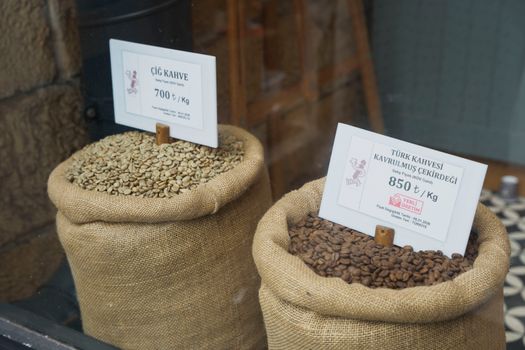
| Turkish Coffee | Ottoman Empire (16th century) | Finely ground coffee, unfiltered, brewed in a cezve; often sweetened and spiced | Middle East, Balkans, Eastern Europe |
| Espresso | Italy (early 20th century) | Concentrated coffee shot, brewed under high pressure; forms base for many drinks | Global, especially Europe and North America |
| Café au Lait | France (17th century) | Equal parts brewed coffee and steamed milk | France, Europe, North America |
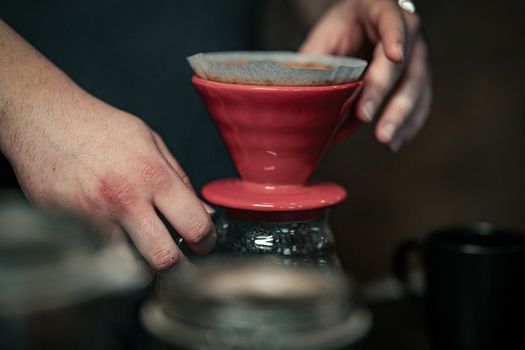
| Drip Coffee | Germany/United States (20th century) | Hot water dripped over ground coffee; filtered | North America, Japan, Scandinavia |
| Cold Brew | Japan/United States (21st century) | Ground coffee steeped in cold water for 12-24 hours; smooth, less acidic | Global, especially urban markets |
The Global Coffee Economy and Its Cultural Impact
Coffee is the world’s second most traded commodity after oil, with annual global exports valued at over $30 billion. More than 2.25 billion cups are consumed every day, making coffee a linchpin of social life and commerce from São Paulo to Seattle.
Coffee shapes economies and livelihoods in over 70 tropical countries. Brazil, Vietnam, and Colombia dominate global production, collectively supplying more than 60% of the world’s coffee. On the consumption side, Scandinavia leads per capita intake, with Finland averaging an astonishing 12 kilograms per person each year.
Culturally, coffee has inspired art, literature, and music. From the Beat Generation’s smoky cafés to the minimalist aesthetics of third-wave coffee shops, the beverage is a symbol of creativity and connection. National rituals like Italy’s morning espresso or Sweden’s fika break highlight coffee’s enduring role in fostering community and conversation.
Looking Ahead: The Future of Coffee in a Changing World
Today, coffee faces new challenges and opportunities. Climate change threatens traditional growing regions, with rising temperatures and unpredictable weather reducing suitable land—scientists estimate that up to 50% of the area suitable for coffee cultivation could be lost by 2050 if trends continue.
In response, researchers are developing resilient coffee varieties, and farmers are adopting sustainable practices. The specialty coffee movement, with its focus on quality, fair prices, and environmental stewardship, is reshaping supply chains.
Advances in brewing technology, from smart coffee makers to precision grinders, are empowering consumers to experiment at home. Meanwhile, new flavors and formats—think plant-based creamers, ready-to-drink cold brews, and even coffee-infused beverages—continue to broaden coffee’s appeal.
Coffee’s rich history is a testament to human ingenuity and adaptability. As it continues to evolve, one thing remains certain: coffee’s journey is far from over.